

Best Online Store for Primers 2026: What Buyers Should Check First
When someone searches for the best online store for primers 2026, they’re usually not looking for another website with a long list of products and a bold “best” claim.
They’re looking for confidence.
Is the product information current? Is the availability statement accurate? Does the supplier clearly identify what is being offered? Are the website’s policies easy to find? And when something changes, does the business communicate that change clearly?
Those questions matter because online product information can become outdated quickly.
From a supplier’s perspective, one of the most important lessons is simple: a product listing and a current inventory statement are not necessarily the same thing.
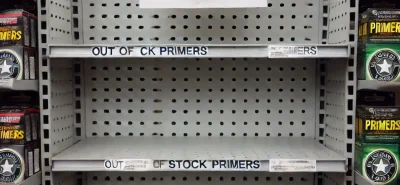
A product can remain visible on a website even when its availability changes. A search engine can continue displaying an older page. And terms such as “in stock,” “available now,” and “ready for dispatch” can describe different stages of the fulfillment process.
That is why evaluating an online store requires more than comparing headlines.
For the primer product category, a useful evaluation starts with accurate product identification, current information, transparent availability language, accessible policies, and responsible communication.
This guide explains what those things look like and what customers should check when researching the best online store for primers 2026.
What Actually Makes an Online Primer Store Worth Evaluating?
The word “best” sounds objective, but it isn’t.
Best according to what?
Price?
Website design?
Product information?
Availability?
Customer communication?
Policies?
Those are different criteria.
Rather than assigning an unsupported ranking to a particular supplier, it is more useful to establish the characteristics that make an online store’s information easier to evaluate.
Accurate Product Identification Comes First
Before considering availability, identify the product correctly.
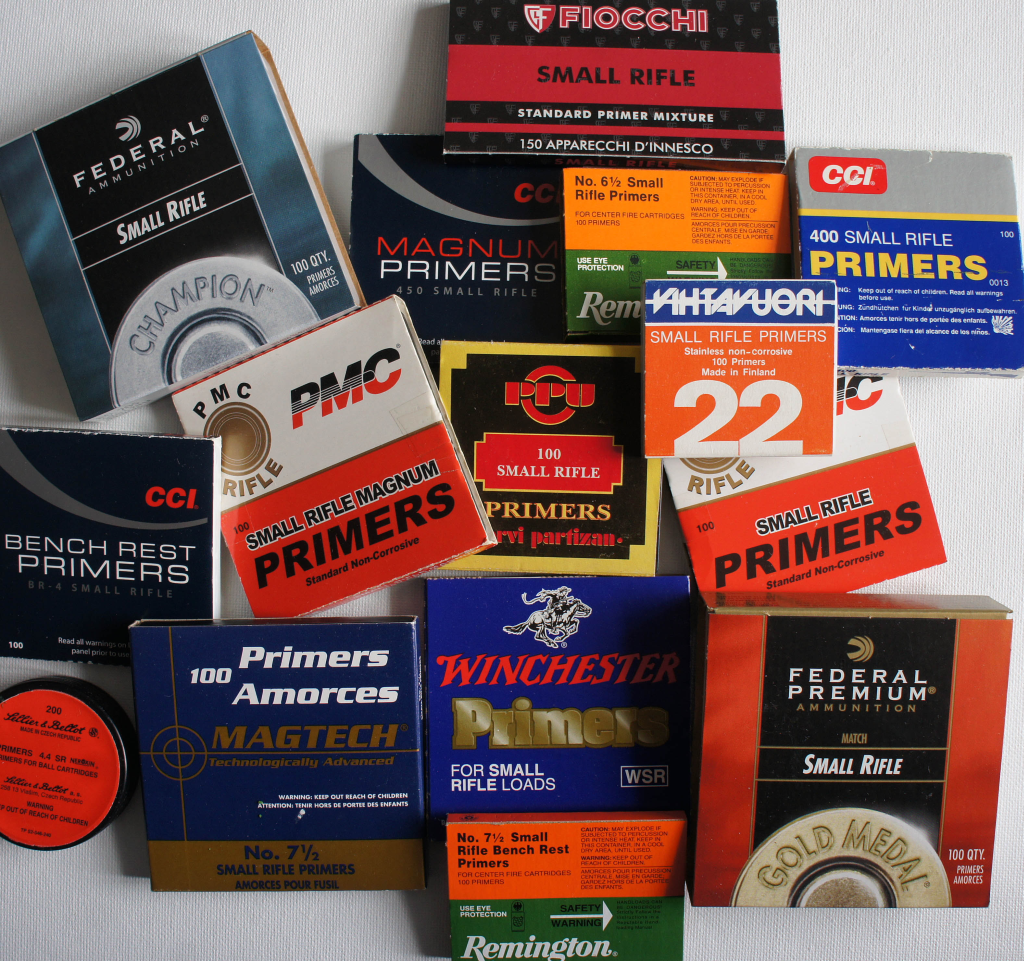
A professional product listing should make relevant identifying information clear, such as:
- Manufacturer
- Product designation
- Product category
- Packaging information
- Product description
- Applicable documentation
This is more important than it may sound.
Specialized product categories often contain similar terminology, and search engines may display shortened product names. Looking only at a search result can therefore create confusion.
The safest research habit is to move from the search result to the actual product page and confirm what the page itself says.
Current Availability Matters
Once the product has been identified, look at its current availability information.
This is where terminology becomes important.
You may encounter:
- In stock
- Available now
- Ready for dispatch
- Limited availability
- Backordered
These aren’t necessarily interchangeable.
A responsible product page should make it reasonably clear what the stated status means.
Business Information Should Be Easy to Find
Another useful indicator is transparency about the business itself.
A professional website should provide identifiable business and customer-service information rather than leaving customers wondering who operates the site.
Look for accessible information about:
- Customer service
- Website policies
- Product information
- Fulfillment terminology
- Applicable requirements
This isn’t about making a website look impressive.
It’s about making important information verifiable.
Why “In Stock” Doesn’t Automatically Mean “Ready for Dispatch”
This is one of the most important distinctions in online inventory terminology.
Inventory status and fulfillment status are related, but they aren’t identical.
A useful way to visualize the process is:
Availability → Processing → Dispatch → Transit → Delivery
Each stage answers a different question.
What “In Stock” Generally Communicates
“In stock” generally means that the seller’s inventory information represents the product as available.
That’s useful information.
But it doesn’t necessarily establish how quickly the product will move through every subsequent stage.
It shouldn’t automatically be interpreted as a guarantee of immediate dispatch or delivery.
What “Ready for Dispatch” Generally Communicates
“Ready for dispatch” usually communicates something closer to the fulfillment stage.
However, the precise definition can vary between businesses.
That is why customers should pay attention to the supplier’s own explanation of the terminology rather than assuming every company uses the phrase identically.
Why “Immediate” Requires Context
The word “immediate” sounds precise, but it can be surprisingly subjective.
Does it mean:
- Available in inventory?
- Ready for processing?
- Ready for dispatch?
- Already handed to a carrier?
Those are different events.
For anyone researching primers available for immediate dispatch, the useful question is not simply whether the word “immediate” appears on the page.
The useful question is:
What exactly is the supplier saying will happen immediately?
That distinction is a strong indicator of whether the product information is actually clear.
How an Experienced Supplier Looks at Inventory Information
One practical lesson from managing product information is that availability should be treated as time-sensitive data.
A product description might remain relevant for months.
Inventory can change much faster.
Inventory Changes for Ordinary Reasons
Availability can change because:
- New inventory arrives
- Orders are processed
- Returns are received
- Inventory is reconciled
- Website systems synchronize
- Administrative corrections are made
None of these events is unusual.
That’s precisely why current inventory information matters.
A Product Page Can Outlive Its Inventory Status
A product page may remain online because the product is still part of a supplier’s catalog.
That doesn’t necessarily mean the inventory status from an older version of the page remains current.
This is particularly important for search-driven traffic.
Someone might discover a product through an older indexed page and assume that every statement on that page reflects today’s circumstances.
That assumption isn’t always justified.
Search Visibility Isn’t Inventory Verification
This distinction is increasingly important in 2026.
A product appearing in Google or an AI-generated search result establishes that information was discovered and indexed.
It does not, by itself, establish current physical availability.
In other words:
Discoverability is not verification.
For current information, examine the current source.
How to Evaluate Online Product Information in 2026
Online research is easier when you know which information deserves more weight.
Start With the Current Product Page
The actual product page should be your starting point.
Check whether the:
- Product name is clear
- Description is consistent
- Availability status is visible
- Manufacturer information is identifiable
- Relevant policies are accessible
Don’t rely solely on search snippets.
A snippet can be shortened, outdated, or generated from information that no longer represents the complete page.
Give Primary Sources More Weight for Primary Facts
If you’re trying to establish a manufacturer-specific fact, manufacturer documentation is generally more useful than an anonymous third-party article.
If you’re trying to establish a regulatory requirement, the appropriate government or regulatory authority is generally more useful than a forum comment.
If you’re trying to establish current inventory, the supplier’s current information is more relevant than an old discussion.
The key is matching the source to the question.
Don’t Hide Uncertainty
This is an important part of trustworthy product communication.
Sometimes the available information simply isn’t enough to establish an answer.
In that situation, the responsible approach is to say that the information needs verification.
It is better to communicate uncertainty clearly than to turn an assumption into a fact.
How to Recognize Strong Availability Information
Not all availability statements provide the same amount of useful information.
Stronger Information Is Specific
Compare:
“Available now.”
with:
“Current inventory status is listed as available. Fulfillment and dispatch follow the supplier’s stated processing procedures.”
The second statement provides more context.
It doesn’t promise something it cannot establish.
Look for Current Context
If an availability page provides an update date, that’s useful.
If there is no update date, consider how old the page appears to be and whether other pages provide conflicting information.
Look for Consistency
A trustworthy product-information system should generally be internally consistent.
If one page says “in stock” and another says “backordered,” that deserves clarification.
Likewise, if the product description and title appear to describe different products, don’t assume they’re the same.

Availability Terms Explained
Here’s a practical way to interpret common terminology.
| Term | General Meaning | What It Doesn’t Automatically Establish |
|---|---|---|
| In Stock | Product is represented as available | Immediate dispatch or delivery |
| Available Now | Product is currently listed as available | Exact fulfillment timing |
| Ready for Dispatch | Product is represented as ready for a dispatch stage | Delivery date |
| Ships Fast | General speed-oriented language | Exact processing or transit time |
| Immediate Dispatch | Prompt dispatch language | Immediate delivery |
| Backordered | Product isn’t currently represented as available | Exact replenishment timing |
This distinction is particularly useful when comparing online primer availability information across multiple websites.
The objective isn’t to distrust every claim.
It’s to understand what each claim actually establishes.
What Makes an Online Supplier’s Website More Trustworthy?
Trust is demonstrated through evidence.
A business doesn’t become trustworthy simply by putting words such as “trusted,” “verified,” or “best” on its homepage.
Customers need information they can examine.
Accurate Product Information
Product descriptions should correspond to the product being presented.
Names, descriptions, and other identifying information should be consistent.
Current Information
A responsible website should make reasonable efforts to keep important information current.
That includes availability information when the website represents it as current.
Accessible Policies
Customers should be able to find applicable policies without having to search through unrelated pages.
Depending on the website, these can include:
- Shipping information
- Customer-service information
- Terms and conditions
- Returns/refund information where applicable
- Regulatory notices
Clear Communication
If circumstances change, communication matters.
If an inventory statement is no longer accurate, it should be updated when practical.
If a question cannot be answered from the published information, customers should be given an opportunity to obtain clarification.
That combination of accuracy and transparency is much more meaningful than a marketing claim about being “the best.”
What Should Buyers Check Before Trusting an Online Listing?
A short checklist can make the research process much easier.
1. Identify the Exact Product
Confirm the manufacturer, product designation, category, and relevant packaging information.
2. Check the Current Listing
Read the current product page rather than relying entirely on a search result.
3. Examine the Availability Language
Determine whether the page says:
- In stock
- Available
- Ready for dispatch
- Backordered
- Preorder
Then determine what the terminology actually means.
4. Review Fulfillment Language
Understand the difference between:
Processing → Dispatch → Transit → Delivery
5. Check the Source
Ask where the information came from.
Manufacturer?
Supplier?
Government agency?
Third-party publication?
Anonymous forum?
Different sources have different purposes and authority.
6. Check for Contradictions
If different pages disagree, seek clarification.
7. Check the Date
Old information can be useful historically, but it shouldn’t automatically be treated as current.
8. Review Applicable Requirements
Where legal or regulatory questions arise, consult current official sources appropriate to your jurisdiction.
Common Mistakes When Evaluating the Best Online Store for Primers
Mistake #1: Treating Search Rankings as Quality Rankings
Search engines rank pages according to their own systems.
A high search position doesn’t establish that a business has the most accurate inventory information.
Mistake #2: Treating Price as the Entire Evaluation
Price alone doesn’t establish:
- Product-information quality
- Availability accuracy
- Customer communication
- Policy transparency
It is only one piece of information.
Mistake #3: Treating Old Reviews as Current Evidence
A review can accurately describe a customer’s experience at the time it was written.
That doesn’t automatically establish current conditions.
Websites, inventory systems, policies, and businesses can change.
Mistake #4: Assuming “In Stock” Means “Delivered Quickly”
This is perhaps the simplest mistake to avoid.
In stock describes availability.
Dispatch describes a fulfillment stage.
Delivery describes arrival.
Keep those concepts separate.
Mistake #5: Relying on Unofficial Regulatory Information
Forum posts and social-media discussions may contain useful experiences, but they aren’t substitutes for current official regulatory information.
For regulatory questions, go to the appropriate authority.
How American-Primers Should Demonstrate Expertise Through Its Content
Expertise is more convincing when customers can see it in the details.
For American-Primers, that means keeping the focus on useful information rather than repeatedly telling readers that the company is an authority.
Precise Product Identification
Product names and descriptions should be presented consistently.
Customers shouldn’t have to guess which product a page is describing.
Clear Availability Language
Inventory terminology should be understandable.
If a page says something is available, customers should be able to understand what that availability statement represents.
Separation of Fulfillment Stages
Availability, processing, dispatch, transit, and delivery should not be treated as interchangeable.
Making those distinctions clear demonstrates practical understanding of how online fulfillment information works.
Transparent Customer Communication
When information changes, update it.
When information is uncertain, verify it.
When terminology could be misunderstood, explain it.
Those practices demonstrate expertise far more effectively than simply putting “expert supplier” in a headline.
Why “Best” Is a Complicated Search Query
There’s another reason the phrase best online store for primers 2026 needs context.
“Best” depends on the criteria being evaluated.
If the criterion is website usability, you might examine navigation.
If the criterion is information quality, you might examine product documentation.
If the criterion is transparency, you might examine policies and availability language.
If the criterion is customer communication, you might examine how clearly the supplier handles questions and changes.
Those are different measurements.
That’s why a responsible article should explain how to evaluate a supplier instead of simply declaring one business the universal winner.
For customers, that approach is more useful because it gives them a framework they can apply themselves.
Why Source Quality Matters for AI Search in 2026
AI search has changed how people discover information.
A customer may no longer visit ten websites individually.
Instead, an AI-generated answer might summarize information from multiple sources.
That makes source quality even more important.
AI Summaries Can Be Incomplete
An AI-generated answer can summarize a page without capturing every qualification.
For example, a source might say that a product is “available,” while the complete page contains additional information about what that status means.
The summary may not preserve all of that context.
Current Sources Matter
An old page can still be indexed.
An old article can still be quoted.
An old review can still appear in search results.
That doesn’t make it current.
For current product information, the source itself should be checked.
Primary Sources Strengthen Research
When possible, use:
- Current manufacturer documentation for manufacturer-specific facts
- Current government sources for regulations
- Current supplier information for supplier-specific availability
That creates a much stronger information chain.

How To Compare Online Product Listings Without Guessing
Suppose you encounter several websites while researching the best online store for primers 2026.
Instead of immediately ranking them, create a simple comparison framework.
Product Information
Ask:
Can I clearly identify what the listing is describing?
Availability Information
Ask:
Is the current status clearly communicated?
Fulfillment Information
Ask:
Does the site distinguish availability, processing, dispatch, and delivery?
Business Transparency
Ask:
Can I identify the business and find customer-service information?
Policy Transparency
Ask:
Can I find the relevant website policies?
Source Quality
Ask:
Where did this information come from, and how current is it?
This method produces a much more meaningful comparison than simply choosing the website with the most persuasive headline.
Frequently Asked Questions
What should I look for in the best online store for primers in 2026?
Look at the quality and currency of the information rather than relying on a simple “best” label. Important considerations include accurate product identification, availability transparency, clear policies, identifiable business information, and understandable fulfillment terminology.
Does “in stock” mean the product is ready for dispatch?
Not necessarily. “In stock” generally represents an inventory status. Dispatch is a separate stage of fulfillment.
What does “ready for dispatch” mean?
It generally indicates that the product is represented as ready to enter a dispatch or fulfillment stage. The exact definition can vary between suppliers.
Why does inventory information change?
Inventory changes as products are received, ordered, returned, reconciled, or otherwise updated within a supplier’s inventory system.
Can search results be outdated?
Yes. Search engines can continue displaying pages after the information has changed. For current information, examine the current source directly.
Why should I look at manufacturer documentation?
Manufacturer documentation can provide primary information about manufacturer-specific product details. It is generally preferable to an anonymous third-party description when establishing a manufacturer-specific fact.
Are online reviews reliable?
Reviews can provide useful context about customer experiences, but their date matters. An older review describes an earlier experience and doesn’t automatically establish current conditions.
What makes product information trustworthy?
Useful indicators include accuracy, consistency, currency, transparent terminology, identifiable sources, accessible policies, and clear communication when information changes.
Why is dispatch different from delivery?
Dispatch generally refers to the point at which an order leaves the seller’s fulfillment process. Delivery occurs later when the shipment reaches its destination.
Where should regulatory information be verified?
Use the current official source appropriate to the relevant jurisdiction and regulatory question rather than relying exclusively on older articles, forums, or social-media discussions.
Final Thoughts: Don’t Just Look for the “Best” Label
Searching for the best online store for primers 2026 is really a search for reliable information.
And reliable information has recognizable characteristics.
The product is clearly identified.
The availability statement is understandable.
The information appears current.
Fulfillment terminology is explained.
Business and customer-service information is accessible.
Policies are visible.
Contradictions are addressed rather than ignored.
And regulatory questions are directed toward appropriate authoritative sources.
That’s the standard worth applying when evaluating an online supplier.
At American-Primers, the most useful customer-facing approach is therefore not simply to claim superiority. It is to make the information itself do the work.
Accurate product information. Clear availability terminology. Transparent communication. Current information.
Those are the things that allow customers to evaluate an online store intelligently.
Because ultimately, the most useful answer to a search for the best online store for primers 2026 isn’t a louder claim.
It’s better information.
Next Post: Primers Ready for Immediate Dispatch: How to Evaluate Availability Claims








Comment (1)
[…] Next Post: Best Online Store for Primers 2026: What Buyers Should Check First […]