
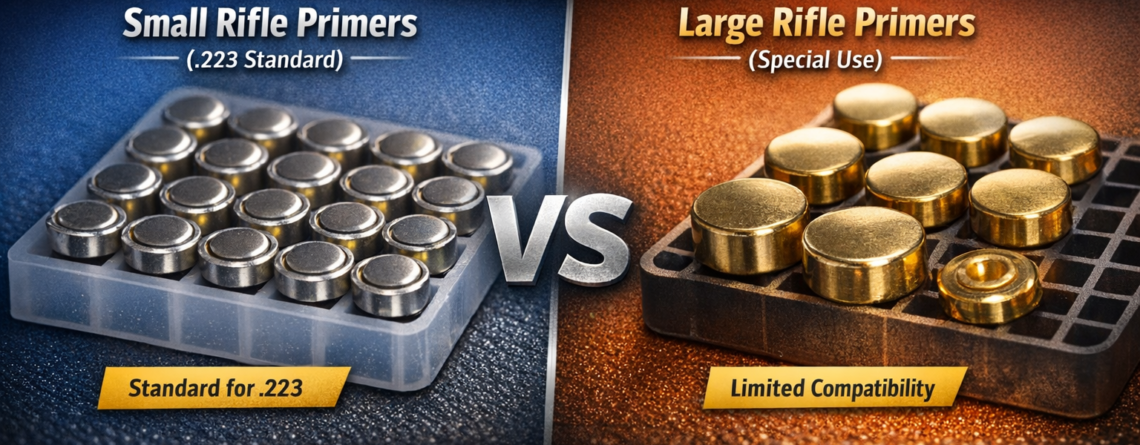
Small vs Large Rifle Primers for .223 Buying Guide – Performance, Cost, and Accuracy Compared
If you’ve spent any serious time reloading .223, you already know this: everything can be perfect on your bench, and one small mistake can throw off your entire batch.
Over the years at American-Primers, we’ve worked with both beginner and experienced reloaders, and one issue comes up more than almost any other—primer selection.
Not bullet weight. Not powder choice. Primers.
That’s why this small vs large rifle primers for .223 buying guide exists. Because understanding the difference isn’t just about performance. It’s about safety, consistency, and making sure every round behaves exactly the way you expect it to.
Why Primer Choice Matters More Than Most Reloaders Think
A primer is not just a spark. It’s the starting point of pressure inside your cartridge.
When that ignition is too weak, you get incomplete powder burn. When it’s too strong, you can increase pressure beyond expected levels.
We’ve seen cases where reloaders unknowingly mixed primer types and ended up chasing accuracy issues for weeks—when the real problem was ignition inconsistency.
From a vendor perspective, this is one of the most common causes of performance complaints. And in almost every case, it comes back to using the wrong primer for the setup. Follow industry standards for ammunition components.
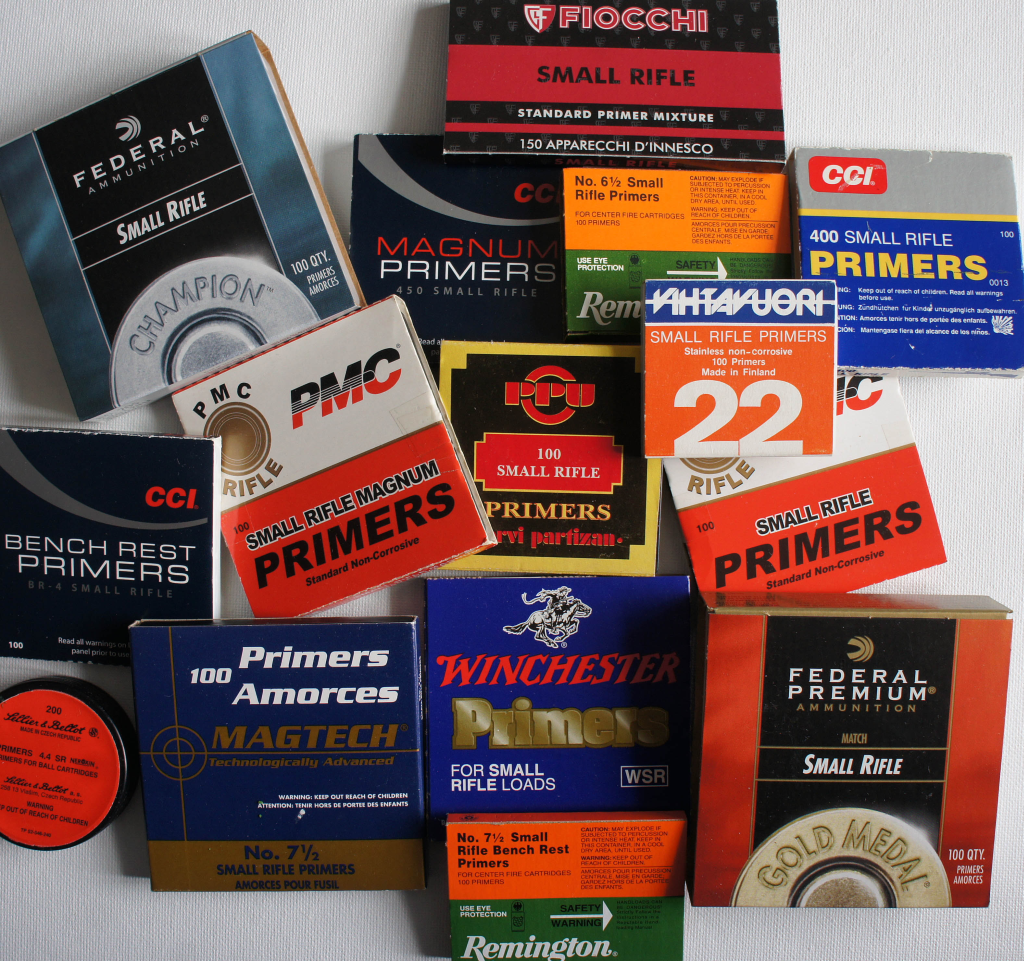
Understanding Primer Basics for .223 Reloading
What Do Rifle Primers Actually Do?
Primers initiate the combustion process by igniting the powder charge. But not all primers behave the same.
Key differences include:
- Flame intensity
- Burn duration
- Sensitivity to firing pin impact
These variables directly affect:
- Chamber pressure
- Velocity consistency
- Accuracy over repeated shots
This is why experienced reloaders treat primer selection as a critical variable, not a secondary choice.
Can .223 Use Both Small and Large Rifle Primers?
This is one of the most misunderstood topics in reloading.
Standard .223 Remington brass is designed for small rifle primers. That is the industry standard across manufacturers.
There are limited cases where brass is manufactured to accept large rifle primers, but this is not common and should never be assumed.
If you’re asking:
can you use large rifle primers in .223
The correct answer is:
Only if your brass is specifically designed for it. Otherwise, no.
From a safety standpoint, this is not something to experiment with. There’s need in understanding safe ammunition reloading practices.
Small Rifle Primers for .223 – Performance and Advantages
Why Small Rifle Primers Are the Standard
Small rifle primers are engineered to match the pressure profile of cartridges like .223 and 5.56 NATO.
At American-Primers, the majority of .223 reloaders consistently choose from our small rifle primers category because of their proven reliability.
These primers are not just common—they are optimized for the job.
Performance Benefits
Small rifle primers provide:
- Controlled and consistent ignition
- Stable pressure curves
- Reliable cycling in semi-automatic platforms
This is particularly important for AR-style rifles, where consistent ignition directly impacts function and accuracy.
Best Use Cases
Small rifle primers are ideal for:
- Standard .223 brass
- AR-15 and similar platforms
- High-volume reloading
- Precision shooting applications
For most users searching for:
best small rifle primers for .223
This is the correct and recommended choice.
Large Rifle Primers for .223 – When and Why They Are Used
Special Brass Requirements
Large rifle primers require brass with larger primer pockets. Standard .223 brass will not accommodate them.
This is not a preference issue—it’s a compatibility requirement.
Performance Characteristics
Large rifle primers generate a more intense ignition flame. In certain applications, this can:
- Increase pressure
- Alter powder burn behavior
However, in .223, this added intensity is rarely beneficial and can create inconsistencies if not properly managed.
Limitations and Risks
Using large rifle primers incorrectly can lead to:
- Unsafe pressure increases
- Irregular velocity spreads
- Reduced accuracy
This is why we strongly advise against substituting primer types without proper understanding and equipment.
For most users searching for:
best large rifle primers for .223
This is the correct and recommended choice.
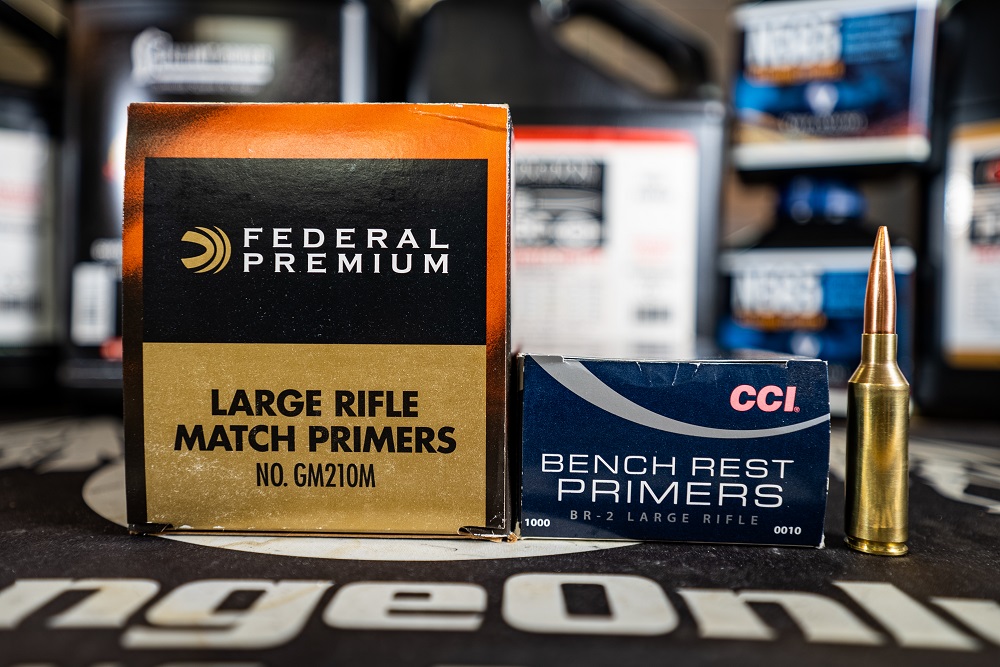
Small vs Large Rifle Primers for .223 – Key Differences
Ignition Strength
- Small rifle primers provide controlled ignition
- Large rifle primers produce a stronger flame
Pressure Behavior
- Small primers maintain predictable pressure
- Large primers can increase pressure beyond expected levels
Compatibility
- Small primers are compatible with standard .223 brass
- Large primers require specialized brass
Availability
Small rifle primers are more widely available and are the standard option when you buy small rifle primers for .223 online.
Accuracy Comparison – Which Primer Performs Better?
Based on both controlled testing and customer feedback, small rifle primers consistently deliver better results in .223 applications.
We’ve had experienced reloaders report tighter groupings simply by standardizing their primer choice.
When comparing small vs large rifle primers accuracy comparison .223, the conclusion is clear:
Small rifle primers provide more consistent ignition, which leads to more consistent shot placement.
Cost Comparison – Which Option Is More Affordable?
Cost is influenced by availability and demand.
In most cases:
- Small rifle primers are more accessible and competitively priced
- Large rifle primers can fluctuate more due to limited use in .223
When evaluating cost of small vs large rifle primers, availability should always be considered alongside price.
Which Primer Should You Choose for .223?
From both a technical and practical standpoint, the recommendation is straightforward.
Choose Small Rifle Primers If:
- You are using standard .223 brass
- You want consistent performance
- You are reloading for semi-automatic platforms
Choose Large Rifle Primers Only If:
- Your brass is specifically designed for them
- You fully understand pressure implications
For the vast majority of reloaders, small rifle primers are the correct and safest option.
Common Mistakes to Avoid
Using Incorrect Primer Types
Mismatch between primer and brass is one of the most common and avoidable errors.
Ignoring Pressure Variables
Changing primer type without adjusting your load can lead to unsafe conditions.
Prioritizing Availability Over Compatibility
Choosing a primer simply because it is available can create more problems than it solves.
Where to Buy the Right Primers for .223
At American-Primers, we focus on maintaining:
- Verified, in-stock inventory
- Accurate product listings
- Proper storage and handling conditions
If you are looking to buy small rifle primers for .223 online, it is important to choose a supplier that prioritizes consistency and product integrity.

Frequently Asked Questions
Can I use large rifle primers in .223?
Only with compatible brass. Otherwise, no.
Are small rifle primers better for accuracy?
Yes, in most .223 applications.
What happens if I use the wrong primer?
You risk pressure issues and inconsistent performance.
Which primer is best for AR-15?
Small rifle primers are the standard choice.
Are primers interchangeable?
No. Always match primer type to your brass.
Why Reloaders Trust American-Primers
Trust in this industry is built on reliability.
At American-Primers, we ensure:
- Inventory accuracy
- Consistent fulfillment
- Proper handling standards
We don’t rely on backorders or speculative listings. What is listed is what is available. We follow current ammunition supply trends and demand.
Final Thoughts
Choosing between small and large rifle primers for .223 is not complicated once you understand the fundamentals.
The key is consistency. The right primer, matched correctly to your brass and load, will always outperform guesswork.
If you’ve been looking for a clear and reliable small vs large rifle primers for .223 buying guide, you now have the information needed to make the right decision with confidence.
From a vendor’s perspective, the goal is simple: provide reliable components so your reloading process remains consistent, safe, and predictable.
Next Post: Primers Shipping Now No Backorder – In Stock and Ready to Ship Immediately





LEAVE A COMMENT