

The Science of Choosing Gun Primers Explained by People Who Actually Test Them
After years of working directly with firearm owners, competitive shooters, and reloaders—and tracking how primer choices perform across thousands of real-world applications—one conclusion becomes unavoidable:
Primer selection is not guesswork. It is measurable, repeatable, and highly dependent on system interaction.
At American-Primers, primer performance is evaluated not through isolated range sessions, but through long-term purchasing behavior, repeat customer feedback, and observed consistency across platforms. When the same primer repeatedly produces stable outcomes for different shooters using different firearms, patterns emerge that go beyond opinion. Check our full range of gun primers.
This article explains the science of choosing gun primers from the perspective of people who see those patterns every day—people who compare expectations against outcomes, and theory against results.
Why Primer Choice Is a Scientific Decision, Not a Preference
Many discussions around primers are framed as personal preference. In practice, preference usually forms after consistent results are observed.
From a scientific standpoint, primer choice is about repeatability:
- Does ignition behave the same across cycles?
- Do outcomes remain stable over time?
- Are results predictable under similar conditions?
Shooters who test primers systematically—and suppliers who observe the aggregated results—quickly learn that outcomes repeat when system variables align. When they do not, inconsistencies appear.
This is why the science of choosing gun primers focuses on cause-and-effect relationships rather than anecdotes.
What “Testing” Means in Real-World Primer Evaluation
True testing is not defined by a single successful result. It is defined by consistency across multiple observations.
In practice, meaningful primer evaluation involves:
- observing ignition behavior across extended use
- comparing results across different firearms and shooters
- identifying trends that persist over time
A single good session may be encouraging, but it is not evidence. When dozens of independent shooters report the same ignition behavior from the same primer type, the results become meaningful.
That distinction—between isolated success and repeatable outcome—is foundational to the science of choosing gun primers.
The Primer’s Role in the Ignition Chain
Primers initiate the firing sequence, but their influence extends far beyond that first moment.
From a technical perspective, primers affect:
- how pressure develops at ignition
- how consistently combustion begins
- how predictable the firing sequence becomes
Small variations at this stage can influence everything that follows. This is why primers are evaluated not by whether they “work,” but by how uniformly they perform.
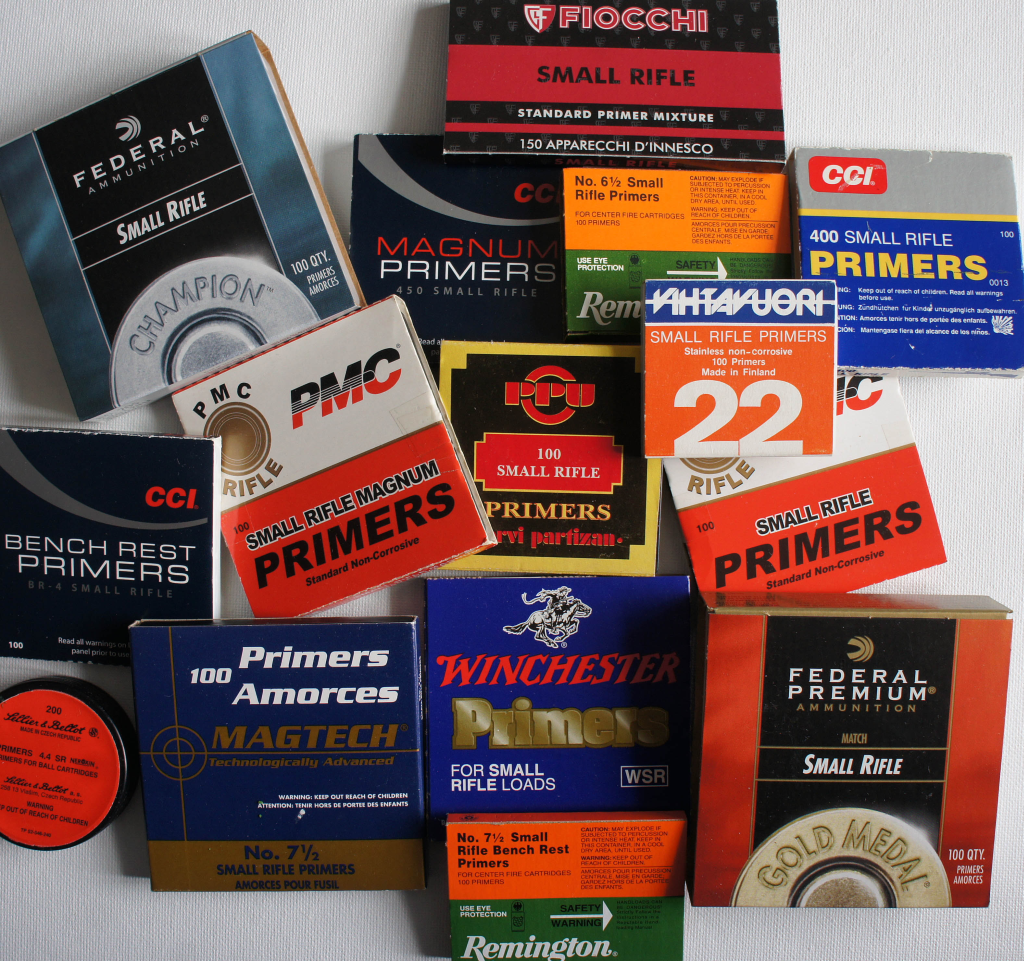
Shooters who understand this do not treat primers as interchangeable components. They recognize them as system-defining inputs. You can read more about industry standards for ammunition components.
Core Scientific Factors That Determine Primer Performance
Ignition Consistency
Testing repeatedly shows that uniform ignition matters more than ignition intensity. Aggressive ignition can introduce variability; consistent ignition reduces it.
This principle explains why many accuracy-focused shooters prioritize primers known for predictable flame behavior rather than maximum energy output.
Cup Hardness and Mechanical Interaction
Primer cups interact mechanically with the firing pin and ignition system. Hardness is not inherently good or bad—it must match the firearm’s design and condition.
Testing reveals that mismatched cup hardness can introduce inconsistent ignition, even when all other components remain unchanged. This interaction-based outcome reinforces a key scientific rule: components must be evaluated as part of a system, not in isolation.
Sensitivity and Controlled Behavior
Sensitivity influences how reliably and predictably ignition occurs. Excess sensitivity or insufficient sensitivity can both introduce inconsistency.
Scientific evaluation favors controlled ignition behavior that aligns with firearm characteristics, not extremes.
Why Primer Size and Type Matter Scientifically
Primer size and type influence ignition dynamics in measurable ways.
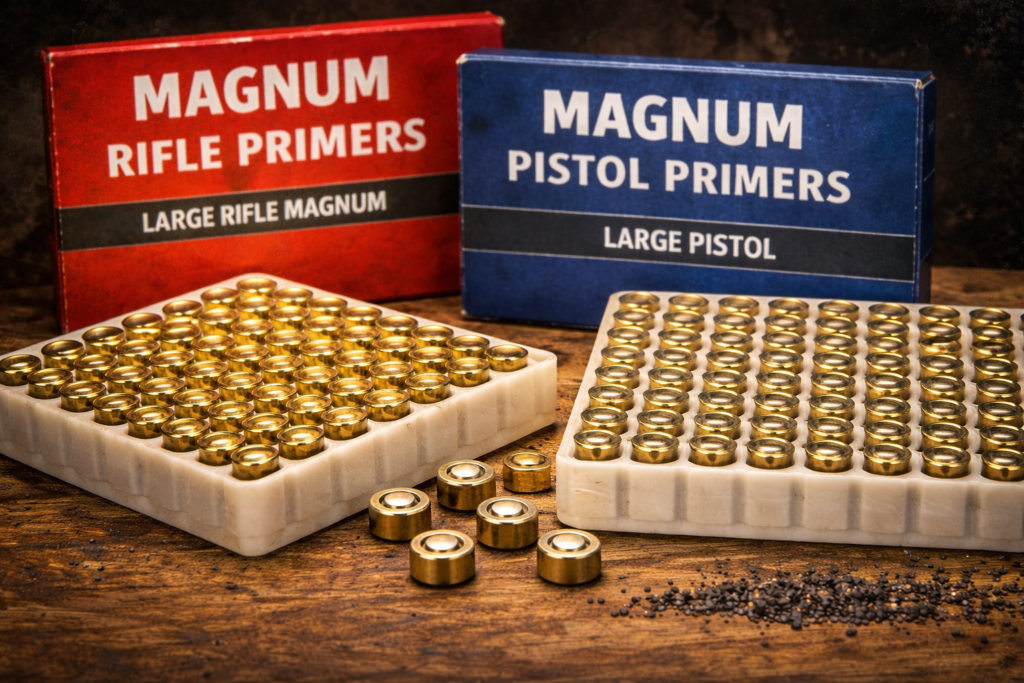
Small vs Large Primers
Size affects:
- ignition compound volume
- flame spread characteristics
- pressure initiation timing
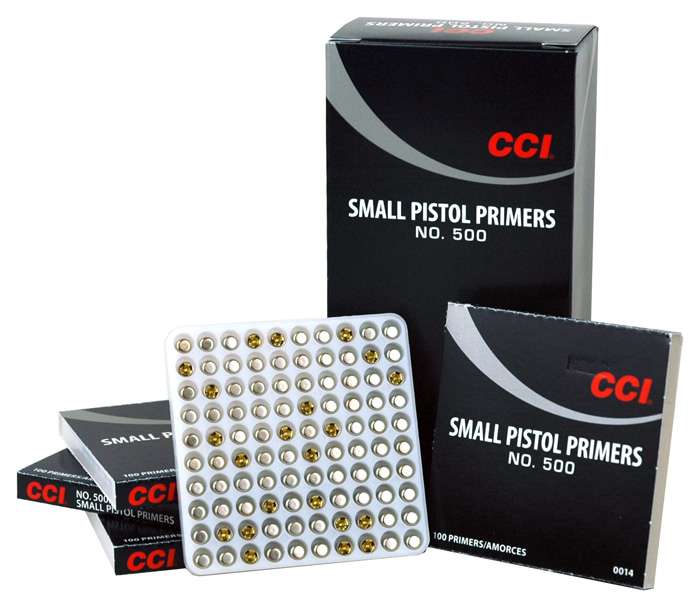
Shooters who test both sizes in appropriate platforms quickly observe differences in behavior. These differences are not theoretical—they manifest in repeatable outcomes. Go through our shop if looking for small and large gun primers explained.
Standard vs Magnum Primers
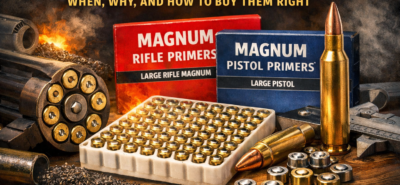
Magnum primers are engineered for specific ignition challenges. When used outside those conditions, testing often shows increased variability rather than improved performance.
Understanding why a primer exists is central to applying the science correctly.
Match vs Standard Primers: What Data Reveals
Match primers are manufactured with tighter tolerances to reduce unit-to-unit variation.
Testing shows:
- in some systems, reduced variation produces measurable benefits
- in others, standard primers already operate within tolerances that do not limit performance
This does not diminish match primers. It reinforces a scientific reality: performance gains depend on whether variation was a limiting factor to begin with.
Accuracy, Reliability, and What Real Testing Shows
Across platforms and use cases, testing consistently reveals two truths:
- Results vary by firearm.
- Repeatability matters more than peak performance.
Shooters who understand the science of choosing gun primers evaluate outcomes across time and conditions. They value predictability over isolated best-case results because predictable systems are easier to manage and trust.
Common Misinterpretations of Primer Science
- Brand reputation is not performance data
- Hotter ignition is not inherently better ignition
- Single-session success is not evidence
Scientific thinking replaces assumptions with observation and pattern recognition.
Why Long-Term Consistency Carries More Weight Than Single Tests
Over time, consistent primers reduce uncertainty. Shooters spend less time diagnosing problems and more time refining technique.
From a scientific perspective:
- variability compounds
- stable systems simplify evaluation
- confidence improves decision-making
This is why experienced testers prioritize long-term consistency over occasional standout results.
How Primer Specialists Interpret Data Differently
A specialist supplier observes:
- reorder frequency
- long-term customer outcomes
- feedback across regions and platforms
These aggregated signals reveal patterns individual shooters cannot easily see. Over time, those patterns form a reliable knowledge base grounded in repeated observation.
This perspective is essential to understanding the science of choosing gun primers at scale.
Applying Scientific Insight as a Buyer
Scientific understanding shifts the question from:
“What is the best primer?”
to:
“Which primer behaves most consistently in my system?”
That shift reduces wasted ammo, frustration, and uncertainty—precisely what science is meant to do.
Read more about firearm performance and reliability fundamentals.
Frequently Asked Questions About the Science of Choosing Gun Primers
Is primer choice really scientific or mostly preference?
It’s scientific in how outcomes repeat. Preference comes later.
Why do test results differ between shooters?
Different systems, different interactions. Science explains variability — it doesn’t deny it.
Are match primers scientifically better?
They reduce variability, but only matter if that variability was limiting performance.
Can testing results change over time?
Yes. Wear, environment, and usage all influence outcomes.
How should buyers apply testing insights responsibly?
By focusing on repeatability, not isolated success.
Final Thoughts: Science Replaces Guesswork
The science of choosing gun primers is not about chasing perfection. It is about reducing unknowns.
When primer behavior is understood in terms of consistency, interaction, and repeatability, decisions become clearer and outcomes become more predictable.
That is the practical value of science—not to impress, but to clarify.





LEAVE A COMMENT