
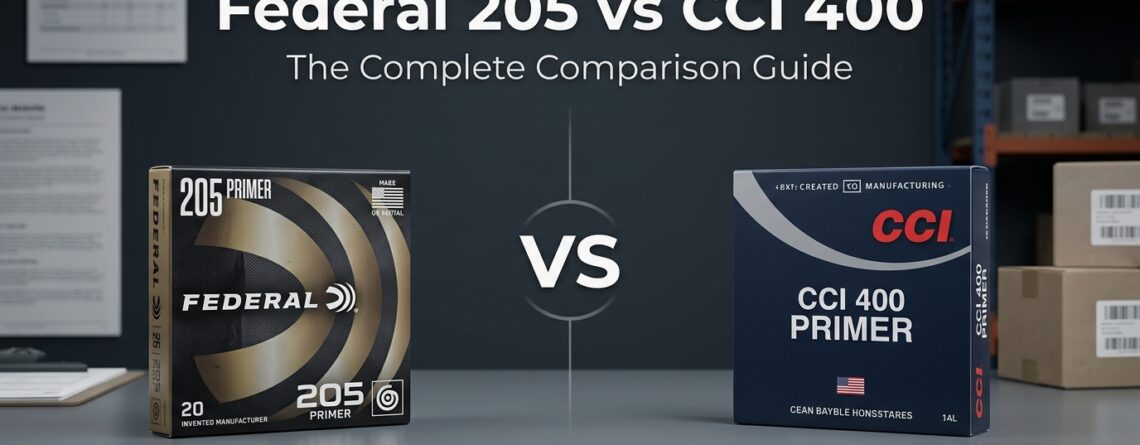
Federal 205 vs CCI 400: The Complete Comparison Guide
If you’ve ever searched for Federal 205 vs CCI 400, you’ve probably noticed something frustrating: there is a lot of information online, but not all of it is equally useful.
One website may describe the products one way. A forum discussion may make a completely different claim. Another retailer may use a short product description that leaves out important details.
That’s where a careful comparison becomes valuable.
When customers ask about two products such as Federal 205 and CCI 400, the responsible approach isn’t to make a quick claim about which one is universally “better.” A useful comparison starts with identifying the products correctly, checking authoritative documentation, understanding what the published information actually establishes, and recognizing what cannot safely be inferred from a product name alone.
That’s the approach American-Primers should take with primer-product information.
The goal isn’t to make the comparison sound complicated. It’s actually the opposite.
The goal is to make it easier for customers to separate verified product information from internet assumptions.
In this guide, we’ll examine the Federal 205 and CCI 400 designations, explain what customers should look for when comparing them, discuss why manufacturer documentation matters, and provide a practical framework for researching these products responsibly.
Federal 205 vs CCI 400: Start With the Product Identity
Before comparing two products, make sure you’re actually comparing the correct products.
That sounds obvious, but product research gets surprisingly messy when manufacturers, retailers, and online discussions use different terminology.
Federal 205
Federal 205 is a product designation associated with Federal primer products.
When researching it, the first step is to verify the exact designation and the information associated with the manufacturer’s current product documentation.
Don’t rely solely on a photograph, a shortened product name, or a third-party description.
The more specific the product identification, the more meaningful the comparison becomes.
CCI 400
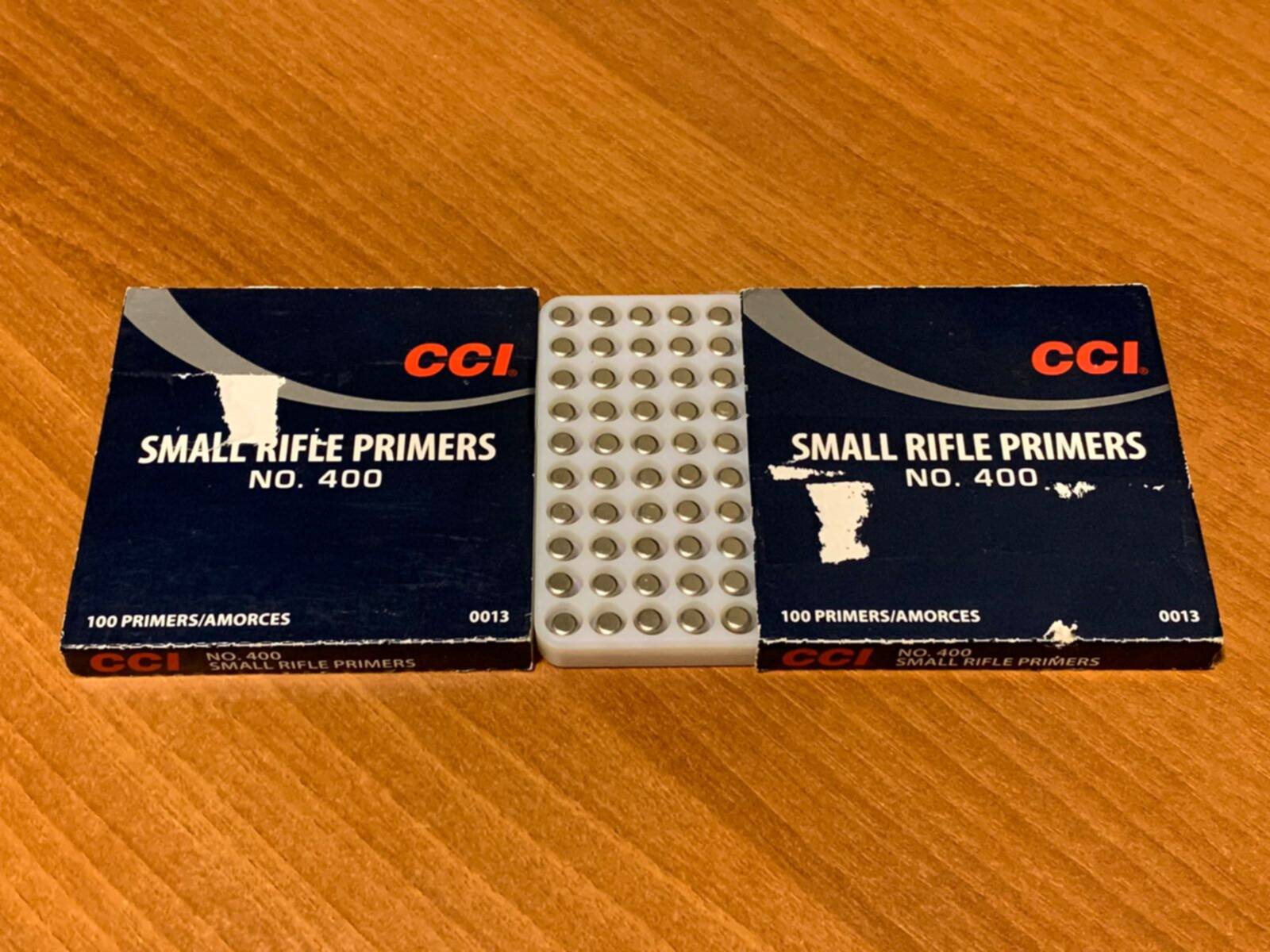
CCI 400 is a CCI product designation.
The same principle applies here.
A customer researching CCI 400 should verify the exact designation, manufacturer information, packaging information, and any published documentation relevant to the product.
This is particularly important when older product listings and newer listings appear together in search results.
Why Product Identification Matters
One of the easiest mistakes in any Federal 205 vs CCI 400 comparison is assuming that two products can be compared simply because they’re discussed in similar contexts.
A proper comparison begins with:
- Manufacturer
- Exact product designation
- Product category
- Current product information
- Published specifications
- Packaging and identification information
Only after those details are established does it make sense to discuss similarities and differences.
Federal 205 vs CCI 400: Understanding the Comparison
The next step is understanding what you’re actually comparing.
A product category can tell you that two items belong to a similar general class. It doesn’t automatically tell you that their construction, specifications, manufacturing characteristics, or intended applications are identical.
That’s an important distinction.
Similar Category Does Not Mean Identical Product
Imagine comparing two replacement parts made by different manufacturers.
They might be designed for a similar purpose and belong to the same general category, yet still have different specifications.
The same principle applies to specialized components.
That’s why statements such as “they’re basically the same” should be treated carefully unless supported by authoritative documentation.
Manufacturer-Specific Information Matters
Federal and CCI are separate manufacturers and brands.
That means product information should be traced to the appropriate manufacturer whenever possible.
A retailer can provide useful information about a product it sells. But when the question involves a manufacturer’s technical specification, the manufacturer’s own documentation is generally the logical reference point.
This is one of the simplest ways to improve the quality of a product comparison.

What Should You Compare When Researching Federal 205 vs CCI 400?
A useful Federal 205 vs CCI 400 comparison doesn’t need dozens of questionable specifications.
It needs the right information.
Product Designation
Confirm the exact product name and designation.
This prevents confusion caused by similar product names, abbreviated listings, or incorrect descriptions.
Product Classification
Confirm how each manufacturer identifies the product category.
Classification provides useful context, but it should not be treated as proof that two products are technically identical.
Published Specifications
If a manufacturer publishes specifications, use those specifications as the foundation of the comparison.
Depending on the available documentation, relevant information may include:
- Product designation
- Product category
- Packaging
- Dimensions where officially published
- Manufacturer documentation
- Other manufacturer-provided characteristics
If a specification cannot be verified, don’t turn an estimate or internet claim into a fact.
That small distinction makes a major difference in trustworthy product content.
Packaging Information
Packaging can provide useful product-identification information.
Customers should compare the product designation shown on packaging with the information provided by the seller.
If something doesn’t appear to match, clarification is better than assumption.
Federal 205 vs CCI 400: Why Online Claims Can Be Confusing
Search for almost any established product and you’ll find years of discussions surrounding it.
That’s useful in one sense.
It also creates a problem.
Information from different periods can become mixed together.
Old Information Can Look Current
A forum post from years ago may still appear in search results.
An old retailer page can remain indexed.
A product photograph can circulate long after the original listing has changed.
None of that necessarily makes the information worthless.
But it does mean the date and source matter.
When researching Federal 205 vs CCI 400 specifications, always ask:
Is this information current, and where did it originate?
Anecdotes Are Not Specifications
A customer might describe their personal experience with a product.
That can be useful context.
But an individual experience doesn’t automatically establish a manufacturer specification or a universal technical rule.
This is one reason American-Primers content should distinguish clearly between:
Documented information
and
individual experience or opinion.
That distinction is one of the foundations of trustworthy product content.
Are Federal 205 and CCI 400 Interchangeable?
This is probably one of the most searched questions surrounding a Federal 205 and CCI 400 comparison.
It is also a question that shouldn’t be answered casually.
The fact that two products have similar classifications does not, by itself, establish complete interchangeability.
Why a Simple Yes-or-No Can Be Misleading
Compatibility questions depend on the specific application and the manufacturer’s relevant guidance.
A product can belong to a particular category without being universally suitable anywhere another product in that category appears.
That’s why responsible product information should avoid turning a broad category comparison into a blanket compatibility claim.
Use Authoritative Documentation
When compatibility is important, consult the documentation associated with the relevant product and application.
That can include:
- Manufacturer documentation
- Product manuals
- Technical specifications
- Official manufacturer support
- Applicable equipment documentation
If those sources don’t resolve a question, qualified professional guidance may be appropriate.
Don’t Let Search Results Make the Decision
Search engines are excellent for discovering information.
They’re not a substitute for verifying technical claims.
A result ranking highly doesn’t automatically mean the information is authoritative, current, or applicable to your specific situation.
That is why responsible research always goes one step further than the search result itself.
Federal 205 vs CCI 400: Manufacturer Information vs Retail Information
Retailers play an important role in helping customers find products.
However, there’s a useful distinction between selling information and manufacturer specifications.
What a Retailer Can Tell You
A retailer can provide information such as:
- Product name
- Manufacturer
- Product category
- Packaging offered
- Availability information
- Commercial terms
- Customer-service information
That’s useful information.
What Manufacturer Documentation Can Establish
For technical characteristics, manufacturer documentation is generally the stronger reference.
When the question involves a specific technical property, customers should look for the manufacturer’s published information rather than relying on an informal description.
What American-Primers Should Avoid
Trustworthy product content shouldn’t exaggerate.
That means avoiding claims such as:
- “Guaranteed to outperform every competitor”
- “Always interchangeable”
- “The strongest option”
- “Works in every application”
- “Universally preferred”
Unless such a statement can be substantiated appropriately, it doesn’t belong in authoritative product content.
Clear information is more valuable than exaggerated marketing language.
What Buyers Should Verify Before Researching These Products
The word “buyer” is important here, but responsible product research begins before any transaction.
Verify the Exact Product
Confirm:
- Manufacturer
- Product designation
- Product category
- Packaging information
- Current product documentation
This establishes the identity of the product you’re researching.
Verify the Source
Ask where the information originated.
A manufacturer specification is different from a retailer description.
A retailer description is different from an anonymous forum comment.
A forum comment is different from a personal anecdote.
Understanding that hierarchy helps you decide how much confidence to place in a claim.
Verify the Date
For a topic such as Federal 205 vs CCI 400 buying guide, current information matters.
Check when the source was published or updated.
If the information is old, determine whether it still reflects the current product.
Verify Applicable Requirements
Products in this category can be subject to applicable laws, regulations, and transportation requirements. Those requirements can vary by jurisdiction and can change over time, so regulatory questions should be checked against current federal regulations and official guidance rather than relying on outdated online discussions.
Those requirements can vary by jurisdiction and can change over time.
Regulatory questions should therefore be checked against current official sources rather than relying on an old article or forum discussion.
Common Misconceptions About Federal 205 vs CCI 400
Let’s address a few assumptions that can make online comparisons less useful.
“They’re in the Same Category, So They’re Identical”
Not necessarily.
A category provides a starting point for comparison.
It doesn’t establish that two products have identical specifications or characteristics.
“Everyone Online Says They’re Equivalent”
“Everyone online” is rarely as comprehensive as it sounds.
A handful of discussions can create the appearance of universal agreement.
Look for primary documentation before treating a technical claim as established fact.
“A Retailer Said It, So It Must Be a Manufacturer Specification”
Not necessarily.
Retailers may summarize product information.
They may also use descriptions supplied through distributors or other sources.
For technical claims, trace the information back to the original manufacturer whenever possible.
“The Cheapest Product Must Be the Best Value”
Price and technical suitability are different questions.
A lower listed price doesn’t establish compatibility, authenticity, quality, or suitability.
A serious comparison should evaluate the criteria that actually matter to the question being asked.
“A Five-Year-Old Article Is Good Enough”
It may be useful for historical context.
It shouldn’t automatically be treated as current.
Product information and regulatory requirements can change.
How to Build a More Trustworthy Federal 205 vs CCI 400 Comparison
If you are researching these products yourself, here’s a simple framework.
Step 1: Identify the Products
Start with the exact manufacturer and designation.
Step 2: Find Primary Documentation
Look for current manufacturer information.
Step 3: Record Only Verified Characteristics
Don’t fill missing information with guesses.
Step 4: Separate Facts From Opinions
Mark anecdotal observations as anecdotes.
Step 5: Consider the Application
Don’t assume a general product-category statement answers a specific compatibility question.
Step 6: Check Current Requirements
For legal or transportation questions, consult current official sources.
Step 7: Recheck Before Relying on the Information
This final step is often overlooked.
Information can change.
Taking a moment to verify important details against the latest authoritative source can prevent unnecessary confusion.
What Experience Really Adds to Product Information
Experience in a specialized product category isn’t about claiming to have personally used every product.
It’s about knowing which questions need to be answered before making a claim.
For example, an inexperienced comparison might say:
“Product A and Product B are basically the same.”
An experienced product-information approach asks:
- What does each manufacturer actually specify?
- Are the product designations correct?
- Is the source current?
- Is the comparison based on documentation or anecdotal reports?
- Is the application clearly defined?
- Is there a regulatory issue that needs an official source?
Those questions produce better content.
They also protect customers from one of the biggest problems in online product research: false certainty.
Sometimes the most professional answer is not a dramatic conclusion.
Sometimes it’s:
“The available documentation doesn’t establish that claim, so verify it before relying on it.”
That’s useful information.
How American-Primers Can Make Product Information Easier to Trust
For American-Primers, the strongest customer experience comes from making product information clear, specific, and transparent.
Clear Product Identification
Customers should be able to see exactly what product is being discussed.
Accurate Descriptions
Descriptions should reflect available documentation rather than exaggerating characteristics.
Transparent Uncertainty
If information cannot be verified, it should not be presented as confirmed.
Current Information
Where possible, product pages and educational content should be reviewed periodically to identify outdated information.
Responsible Guidance
When a question involves technical compatibility, legal requirements, or transportation rules beyond the information available on a product page, customers should be directed toward the appropriate authoritative source.
That approach may sound less dramatic than making a bold claim.
It’s also far more useful to someone who is trying to make an informed decision.

Federal 205 vs CCI 400: A Practical Research Checklist
Before relying on information from any comparison, work through this checklist.
Product Identity
- Is the manufacturer clearly identified?
- Is the exact product designation correct?
- Is the product category clearly stated?
- Does the packaging information correspond with the listing?
Technical Information
- Are specifications attributed to a reliable source?
- Are manufacturer specifications available?
- Are opinions clearly distinguished from documented facts?
- Are claims being made beyond what the source establishes?
Currency
- When was the information published?
- When was it last updated?
- Does current manufacturer information support it?
Compatibility
- Is the application clearly defined?
- Does the relevant manufacturer documentation address the question?
- Is someone relying solely on forum anecdotes?
Compliance
- Are applicable legal requirements being considered?
- Are transportation requirements being verified from current sources?
- Has the reader been directed toward an appropriate official authority for regulatory questions?
Frequently Asked Questions About Federal 205 vs CCI 400
What is the difference between Federal 205 and CCI 400?
Federal 205 and CCI 400 are distinct manufacturer product designations within the primer-component category. A meaningful comparison should rely on current manufacturer information and clearly distinguish documented characteristics from assumptions.
Are Federal 205 and CCI 400 the same product?
No. They are different manufacturer product designations. Similar categorization does not mean that two products are literally identical.
Are Federal 205 and CCI 400 interchangeable?
Customers should not assume interchangeability based solely on product category or online commentary. Compatibility should be verified using the relevant manufacturer and application documentation.
Why are Federal 205 and CCI 400 compared so often?
They are commonly discussed within a similar product category, which naturally leads people researching primer products to look for a Federal 205 vs CCI 400 comparison.
Where should technical specifications come from?
Manufacturer documentation is the preferred starting point for technical specifications. Retailer information can supplement that information, but technical claims should be traced to authoritative sources whenever possible.
Can online forums be useful?
Yes, forums can provide firsthand experiences and identify questions worth researching. However, anecdotal reports should not automatically be treated as manufacturer specifications or universal rules.
Why does the date of a product article matter?
Because product information can change. A historical article can be useful for background, but current research should prioritize current manufacturer and official information.
Does price determine which product is preferable?
Price alone doesn’t establish technical suitability, compatibility, authenticity, or quality. A meaningful comparison should consider the criteria relevant to the particular research question.
Final Thoughts on Federal 205 vs CCI 400
A trustworthy Federal 205 vs CCI 400 comparison doesn’t need exaggerated claims.
It needs good information.
Start by identifying the exact products. Then look for current manufacturer documentation. Separate published specifications from opinions. Be careful with old articles and forum discussions. And when a question involves compatibility, legal requirements, or transportation, verify the relevant information through appropriate authoritative sources.
That process may take a few extra minutes, but it produces something much more valuable than a quick internet verdict: confidence that the information you’re relying on has been properly checked.
For American-Primers, that’s the standard worth maintaining.
Customers should be able to understand what they’re looking at, know which information has been verified, recognize where uncertainty remains, and find the appropriate source when a question goes beyond general product information.
That’s what responsible product content looks like.
And when comparing Federal 205 vs CCI 400, the most important question isn’t simply which name appears first in a search result.
It’s whether the information behind the comparison is accurate, current, properly sourced, and relevant to the question being asked.
Next Post: Primer Supply Chain Availability 2026: What’s Really Changing and What Buyers Should Know








Comment (1)
[…] Next Post: Federal 205 vs CCI 400: The Complete Comparison Guide […]