
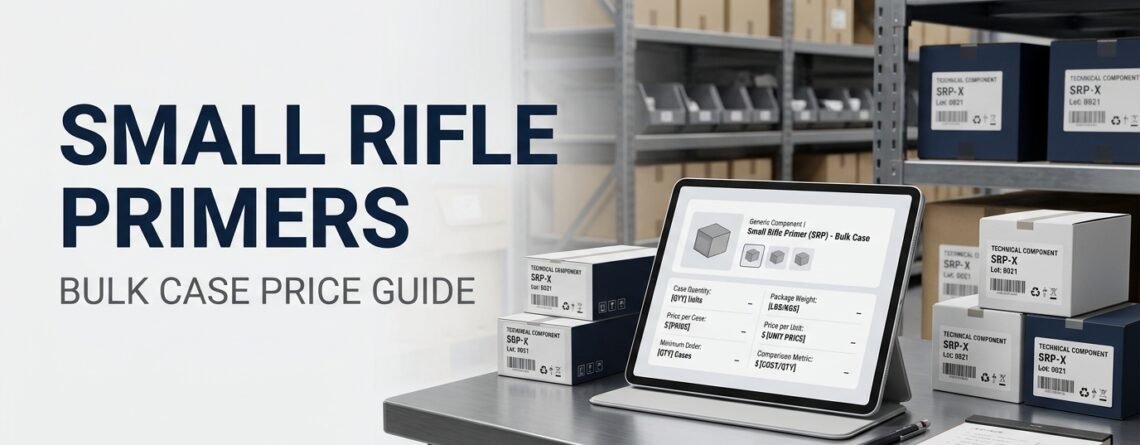
Small Rifle Primers Bulk Case Price: What Buyers Should Know Before Comparing Costs
When customers search for small rifle primers bulk case price, they usually want a simple answer: What should I expect to pay, and how do I know whether I’m comparing prices fairly?
After working with product listings and customer questions in the primers category, we’ve found that the number displayed on a page is only one part of the picture.
The product itself matters. The quantity matters. The packaging matters. Current availability matters. And the terms attached to the listing can matter just as much as the advertised price.
This is where many online comparisons go wrong.
A customer sees one listing for a certain price and another listing for a different price and immediately assumes the cheaper one is the better value. But if the two listings represent different products, quantities, packaging configurations, or conditions, the comparison isn’t really apples to apples.
At American-Primers, we believe pricing information is most useful when the details behind the number are clear.
So rather than focusing only on the lowest advertised figure, let’s look at what actually needs to be verified when evaluating bulk-case pricing information for small rifle primers.
What Does “Small Rifle Primers Bulk Case Price” Actually Mean?
The phrase small rifle primers bulk case price combines several different pieces of information.
“Small rifle primers” identifies the product category.
“Bulk” indicates that the product is being presented in a larger quantity.
“Case price” refers to the price associated with the stated case or packaged quantity.
Those terms may sound straightforward, but there is an important distinction: the exact quantity and product configuration can vary from one listing to another.
That’s why we recommend starting with the product information rather than the price.
Understanding the Product Being Listed
A professional product listing should identify the product clearly.
Depending on the manufacturer and product, that information can include:
- Manufacturer
- Product name
- Product designation
- Packaging information
- Stated quantity
- Other identifying details
This information gives the customer something concrete to compare.
If two listings use similar wording but identify different products, treating them as identical can lead to a misleading price comparison.
What “Bulk” Means in a Listing
The term “bulk” doesn’t automatically tell you the exact number of units included.
That number should come from the product listing itself.
For example, two suppliers might both use the word “bulk” while offering different quantities or packaging configurations.
That’s why experienced buyers don’t stop at the word “bulk.”
They check what the seller actually says the package or case contains.
Understanding Case Pricing
A small rifle primers case price is the stated price associated with a particular case or quantity.
The total price alone doesn’t tell you whether the listing represents better value.
To make a meaningful comparison, you need to establish three things first:
What product is it?
What quantity does the price represent?
What terms apply to the listing?
Once those details are established, the price becomes much easier to interpret.
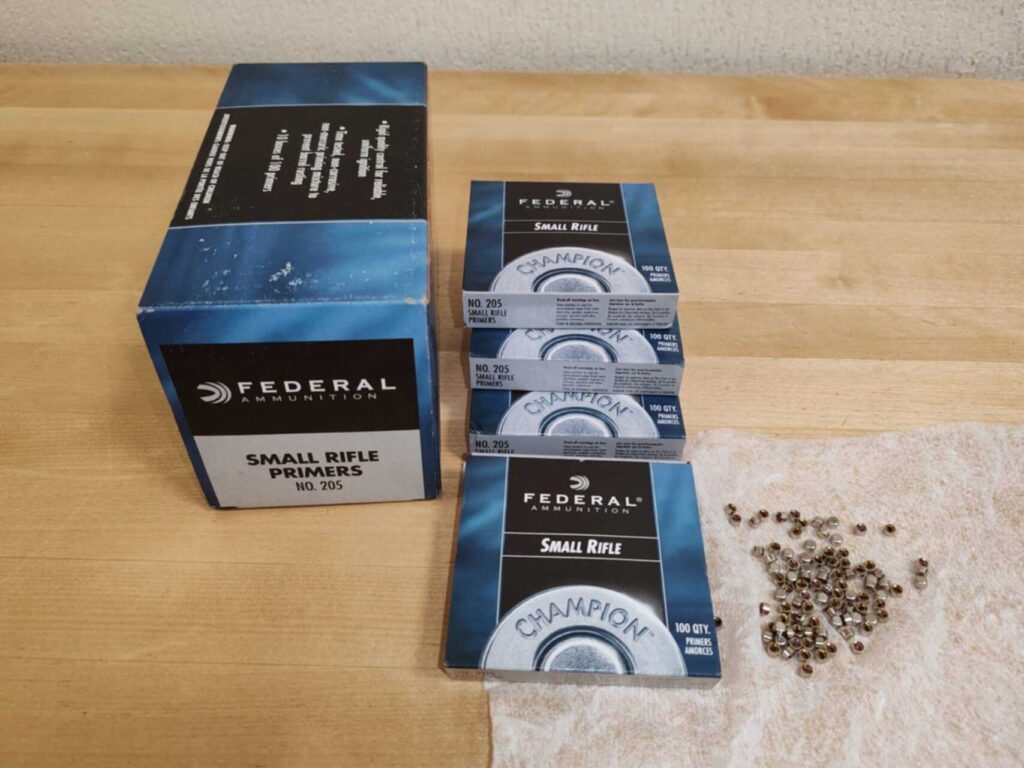
Why Small Rifle Primers Bulk Case Prices Can Differ
Different prices don’t automatically mean that one seller is overcharging or that another seller is offering an unusually good deal.
There can be legitimate differences behind the numbers.
Product Differences
The first thing we recommend checking is whether the products are actually equivalent.
Manufacturer and product designation are particularly important.
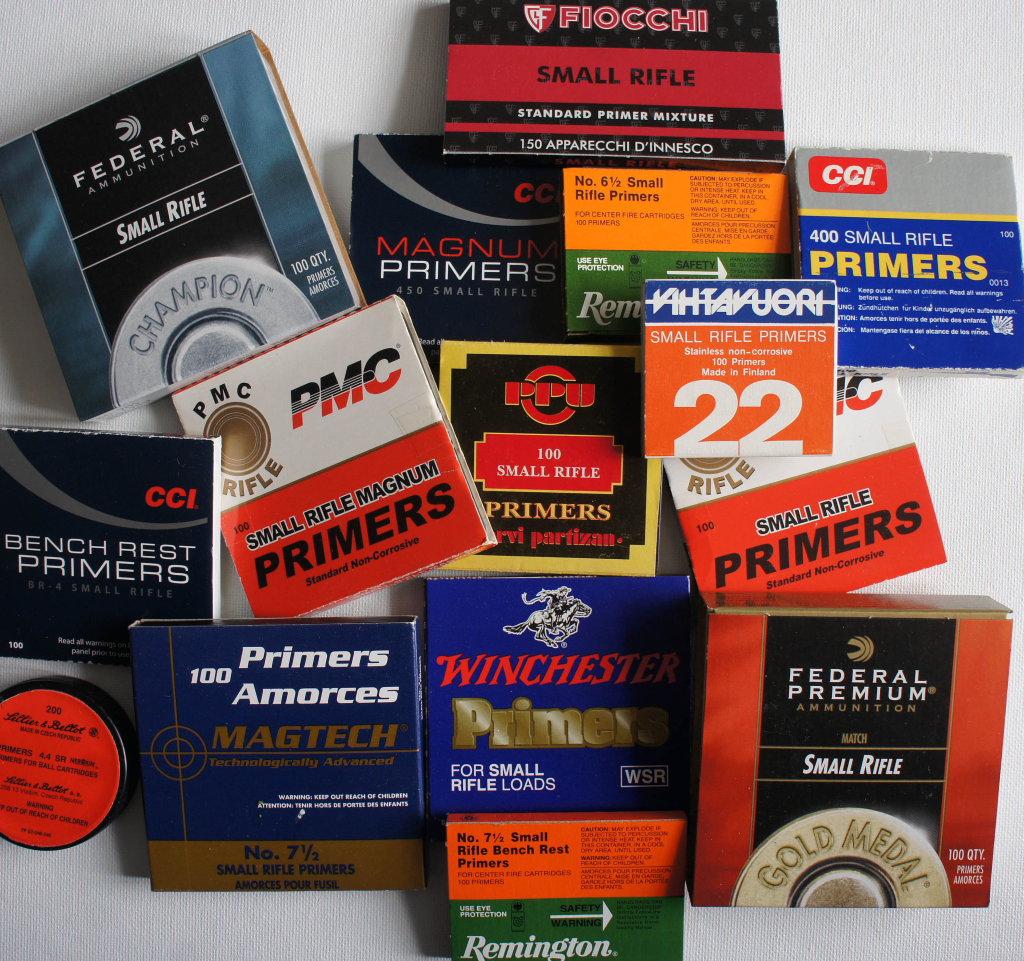
Two listings may both fall under the general category of small rifle primers while representing different products.
A comparison that ignores those distinctions isn’t necessarily a useful comparison.
Quantity Differences
Quantity is another major source of confusion.
A lower total price may simply represent a smaller quantity.
Likewise, a higher total price may represent a larger quantity.
This is why the phrase bulk small rifle primers price should never be evaluated without checking the quantity associated with the advertised price.
Packaging Differences
Packaging configuration can also affect how listings are presented.
The important point isn’t to assume that one packaging format is automatically better.
The important point is to identify exactly what each listing represents before comparing the numbers.
Availability Differences
Pricing information should also be considered alongside availability.
A listing marked as currently available isn’t necessarily equivalent to a listing describing anticipated or future availability.
Terms such as:
- In stock
- Available
- Out of stock
- Expected
- Restocking
- Backordered
can describe different inventory situations.
When reviewing a price, make sure you understand the availability statement attached to it.
How to Compare Small Rifle Primers Bulk Case Price Correctly
A reliable comparison doesn’t have to be complicated.
In our experience, the easiest approach is to follow the same order every time.
Start With the Exact Product
Before comparing prices, identify the exact product.
Look for the manufacturer, product designation, packaging information, and other identifying details provided by the seller.
This prevents a common mistake: comparing products simply because they appear under the same broad category.
Verify the Quantity
Next, confirm the quantity associated with the advertised price.
Don’t assume that “bulk” means the same quantity everywhere.
Don’t assume that “case” represents the same configuration across every listing.
Use the quantity stated by the seller.
Examine the Advertised Price
Once the product and quantity are confirmed, look at the listed price.
Now you’re comparing a number that has context.
Without that context, a price comparison can be surprisingly misleading.
Review the Applicable Terms
Finally, review the complete listing for any applicable shipping, tax, handling, or other stated charges and conditions.
The product price and the total transaction amount aren’t always the same thing.
That’s why we encourage customers to review the complete information rather than relying on a headline price alone.
Why the Lowest Small Rifle Primers Bulk Case Price Isn’t Always the Best Comparison
Everyone likes a lower price.
That’s completely understandable.
But when researching small rifle primers bulk pricing, the lowest number isn’t automatically the most meaningful number.
A Lower Price May Represent Less Product
If one listing represents a smaller quantity, its lower total price doesn’t necessarily make it less expensive on a comparable basis.
Quantity must be established first.
A Similar Name Doesn’t Guarantee an Identical Product
Product names can look similar.
That’s why manufacturer and product designation deserve attention.
If the identifying information differs, determine what you’re actually comparing before drawing a conclusion from the price difference.
Additional Costs Can Change the Overall Amount
The advertised product price may not include every applicable cost.
Shipping and other charges can affect the final transaction amount, depending on the seller and applicable terms.
A responsible comparison therefore considers more than the first number displayed.
Availability Can Change the Meaning of a Listing
A price attached to a currently available product is different from information associated with an anticipated restock or historical listing.
This is one reason current product information matters so much.
Understanding Case Price Versus Unit Price
Customers researching small rifle primers price per case sometimes want to understand how a larger total price compares with another listing.
The basic mathematical concept is simple:
Total price ÷ stated quantity = price per unit
This can be useful for comparing equivalent listings.
But there is an important condition.
The products and quantities need to be comparable first.
Why the Calculation Isn’t the First Step
Suppose one listing has a lower total price.
That sounds attractive.
But if it represents a different quantity, the total price doesn’t tell you enough.
The better sequence is:
Identify the product → confirm the quantity → verify the price → calculate if appropriate → compare equivalent listings.
That approach keeps the math from creating a false sense of precision.
Don’t Let a Calculator Replace Product Information
A calculator can tell you what one number divided by another equals.
It can’t tell you whether two products are actually equivalent.
That’s why product information comes first.

What Can Affect the Overall Cost?
When evaluating small rifle primer bulk cost, consider the complete pricing picture.
Product Price
This is the advertised amount associated with the product listing.
It’s the natural starting point, but not necessarily the complete picture.
Quantity
The quantity tells you what that advertised amount represents.
Without quantity information, the total price has limited comparison value.
Shipping and Applicable Charges
Depending on the transaction, shipping and other applicable charges may affect the final amount.
Review the current terms associated with the specific listing.
Taxes
Applicable taxes can vary according to the transaction and jurisdiction.
Where relevant, these should be considered separately from the advertised product price.
Current Availability
Availability doesn’t necessarily change the mathematical price of a listing, but it changes how the information should be interpreted.
Current inventory information and historical or estimated information should not be treated as the same thing.
How to Evaluate Small Rifle Primer Pricing Information
When customers ask how to compare small rifle primer price comparison information, we recommend focusing on consistency.
Compare Equivalent Products
Start by matching the product identity.
Manufacturer, product designation, and other identifying information should be reviewed carefully.
Compare Equivalent Quantities
Then make sure the quantities represented by the prices are comparable.
This is especially important when one listing is described as a bulk package and another as a case.
Check the Date and Currency of the Information
Online information can become outdated.
A price displayed in an old article or third-party post shouldn’t automatically be treated as a current price.
The current product listing is a more appropriate place to verify current information.
Review the Complete Listing
Don’t rely solely on a search-result snippet.
Search engines can display abbreviated information that doesn’t include the full product description, quantity, availability status, or applicable terms.
The original listing provides the necessary context.
Why Current Pricing Information Matters
Anyone who has followed online product pricing for a while has seen how quickly information can become outdated.
A page can remain searchable long after its original information has changed.
Old Articles Can Show Historical Prices
An article published at an earlier point in time may accurately describe pricing when it was written but no longer represent the current price.
That doesn’t necessarily mean the article was wrong.
It means the information was time-specific.
Search Results Can Lack Context
A search result may display a price without showing:
- Quantity
- Product designation
- Availability
- Shipping terms
- Date of the information
That’s why we recommend opening the original product page before relying on a price found through search.
Current Product Information Should Take Priority
When researching small rifle primers current price, current seller information is more useful than an old comparison article or forum post.
The goal isn’t simply to find a number.
The goal is to understand what that number represents today.
What American-Primers Customers Should Look For in a Product Listing
At American-Primers, we understand that customers want product information they can actually use.
That starts with clear identification.
Product Identity
The listing should make it clear what product is being described.
Quantity Information
The stated quantity should be reviewed before comparing the price against another listing.
Pricing Information
The advertised price should be considered alongside the information surrounding it.
Availability Information
Customers should distinguish current availability from estimated, anticipated, or historical information.
Complete Terms
Review the applicable conditions associated with the listing rather than relying only on a headline price.
This approach helps reduce misunderstandings and gives customers a clearer basis for evaluating the information available to them.
Product availability and pricing are only part of the purchasing picture. Applicable federal, state, and local requirements can also vary depending on the product and circumstances. For current federal information involving firearms, ammunition, explosives, and related regulated products, readers should consult the official Bureau of Alcohol, Tobacco, Firearms and Explosives (ATF) resources rather than relying on outdated third-party information.
Common Mistakes When Comparing Bulk Case Prices
Mistake #1: Looking Only at the Lowest Number
The lowest number is easy to spot.
The details behind the number require another few seconds of attention.
Those seconds can make a significant difference to the quality of the comparison.
Mistake #2: Assuming Bulk Means the Same Quantity
It doesn’t necessarily.
Always verify the stated quantity.
Mistake #3: Ignoring Product Designations
A broad product-category name isn’t enough to establish that two listings are identical.
Review the specific product information.
Mistake #4: Forgetting Additional Costs
The advertised product price may not represent every applicable charge.
Review the complete terms.
Mistake #5: Using Outdated Pricing Information
An old article, screenshot, or social-media post may no longer represent current pricing.
Check the current source.
Mistake #6: Treating Search Snippets as Complete Listings
Search engines provide useful starting points, but snippets can omit important context.
Go to the original product page whenever possible.
A Simple Checklist for Evaluating Small Rifle Primer Pricing
If you’re researching bulk case pricing for small rifle primers, here’s a straightforward checklist to keep beside you.
1. Product
What exact product is being listed?
2. Manufacturer
Is the manufacturer clearly identified?
3. Product Designation
Does the designation match the product you’re comparing it with?
4. Quantity
How much product does the advertised price represent?
5. Price
What is the stated price for that quantity?
6. Additional Charges
Are there applicable shipping, taxes, handling costs, or other stated charges?
7. Availability
Does the listing describe current inventory or anticipated availability?
8. Date
Is the information current?
9. Source
Is the information coming directly from the seller or from a secondary source?
If those nine questions have clear answers, you’ve already eliminated many of the problems that make online price comparisons confusing.
Questions Customers Commonly Ask
What is a small rifle primers bulk case price?
It is the advertised price associated with a stated quantity or case configuration of a small rifle primer product. The exact product and quantity should always be verified from the individual listing.
Why can small rifle primer bulk prices differ?
Differences can result from the product, manufacturer, quantity, packaging, availability, seller terms, and other commercial factors.
Is the cheapest case price always the best value?
Not necessarily. The comparison only becomes meaningful after confirming that the products, quantities, and relevant terms are comparable.
How should I compare small rifle primer prices?
Begin with product identification, verify the quantity, review the advertised price, and then consider applicable additional costs and availability information.
Why does quantity matter when comparing case prices?
Because a total price has little meaning without knowing how much product that price represents.
Can online pricing change?
Yes. Online product information can change over time. Current listings should be checked when current pricing matters.
Why shouldn’t I rely entirely on search results?
Search results may display abbreviated or outdated information. The original product listing provides more context.
Why should I check the product designation?
Because products within the same broad category may have different identifying characteristics, specifications, or packaging.
Final Thoughts: Compare What You’re Actually Getting
When researching small rifle primers bulk case price, it’s easy to make the comparison more complicated than it needs to be.
Start with the product.
Confirm the quantity.
Check the price.
Review the applicable terms.
Look at availability.
And make sure the information you’re using is current.
That simple process gives you a much better understanding of what you’re actually comparing.
At American-Primers, our goal is to make product information straightforward enough that customers don’t have to guess what a listing means. Clear product identification, accurate quantity information, current availability details, and transparent pricing information all contribute to a better customer experience.
So the next time you see two different small rifle primers bulk price figures, don’t immediately ask which number is lower.
First ask a better question:
Are these actually comparable listings?
If the answer is yes, the price comparison becomes much more meaningful.
If the answer is no, the lowest number may not tell you much at all.
Good purchasing decisions start with good information—and good information starts with understanding exactly what you’re looking at.
Next Post: Reloading Primer Restock Schedule 2026: How to Read Availability Updates









LEAVE A COMMENT